
Engineering: Public Works
Our Mission
- Provide the citizens of Collin County the safest driving conditions possible through proficient construction and maintenance of all county roads and bridges.
- Maintain good public relations by providing information in a helpful and informative manner.
- Uphold the policies approved by the Commissioners Court.
- Continuously strive for construction and maintenance improvements through use of new methods and materials.
Latest News
What Is That and How Is It Done?
Asphalt Down: How A Road Is Built
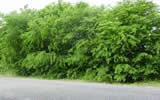
Before: Trees and vegetation encroaching on the roadway are removed or trimmed. This is brush before cutting:

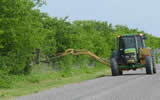
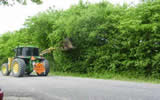
During: Here's the mower pruning the foliage:

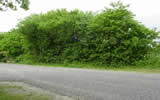
After: The roadway is now clear:

Keeping water away from the roadbed is very important. Drainage ditches are either created or improved on either side of the roadway. Culverts are installed where the road crosses streams. Driveway culverts are installed as needed to improve drainage.
Dig Up the Old Culvert: Old culverts are crushed and sold for scrap, saving all of us money.
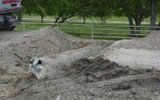
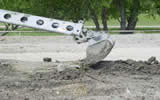

Remove the Old Culvert: The old culvert is placed on the side of the road for pickup later.
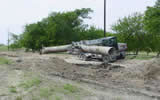
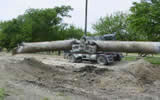
Install the New Culvert: The new culvert will keep water away from the road for many years!
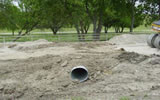
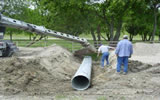
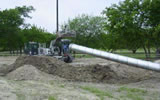

The roadbed, which is the foundation upon which the road base and asphalt pavement sit, is prepared:
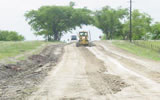
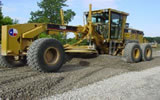
Level the Roadbed: Graders level the roadbed. Notice the improved drainage ditch on the left of the pictures below.
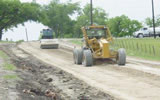

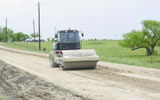
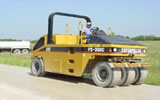
Compact the Roadbed: The roller follows the grader and compacts the roadbed surface, ensuring a stable surface for the base and pavement to come.
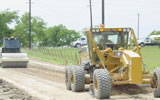
After the roadbed is leveled and stabilized, tons of special rock is installed on the roadway:
Lay Down the Rock: Special rock material, necessary for a strong solid base for the asphalt, is "belly dumped" onto the roadbed. Each load can weigh up to 13 tons of rock!
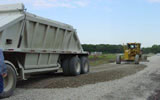
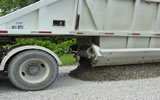
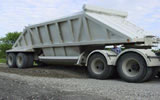

Level the Rock: A grader levels the newly deposited rock to usually about an 8 inch thickness. The thickness of the rock layer depends on the ultimate height of the road.
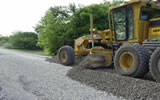
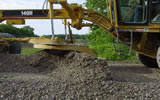
Slush and Compact the Base: After the rock has been spread evenly, water is added to the base. Rollers then compact the wet base producing a smooth surface for the asphalt.
Applying asphalt is relatively quick, thanks to all the prior preparation:
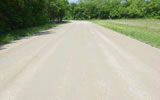
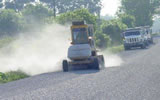
Sweep the Road: Excess rock and debris are cleared so that the emulsion will adhere to the road base.

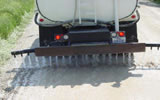
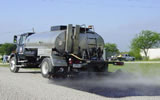
Apply Emulsion: Emulsion is the "glue" that binds the rock material the base and may only be applied in warm and dry weather conditions.
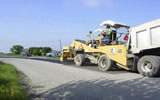
Lay Down Rock: Dump trucks filled with rock are hitched to the rear of the Chip Box, which will lay the rock down onto the road. The dump truck feeds rock to the Chip Box as both vehicles travel the road in tandem.
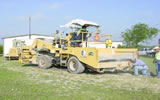
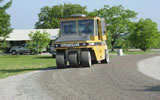
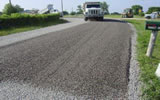
Compact the Rock: Once the asphalt road is laid or "shot" (see first picture below), heavy rollers run over the road to further compact the rock.


One last step is needed to finish a road so that you know where you’re going:
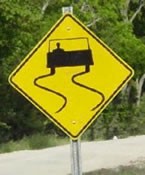
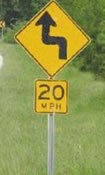
Road Signage: Appropriate road signs are installed where necessary.


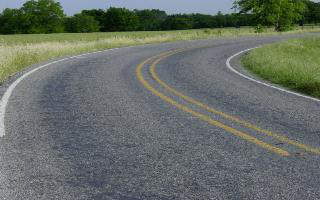
Road Striping: To help you stay on your side of the road, striping is applied. The new road is now ready to be used for many years to come!

- Title
- STEP 1: Brush Cutting
- Description
Before: Trees and vegetation encroaching on the roadway are removed or trimmed. This is brush before cutting:
During: Here's the mower pruning the foliage:
After: The roadway is now clear:
- Title
- STEP 2: Utility Relocation
- Description
- Utility lines buried along the path of the new road must be moved. This process requires the participation of the applicable utility companies and can take up to 120 business days, weather permitting.
- Title
- STEP 3: Drainage Improvement
- Description
Keeping water away from the roadbed is very important. Drainage ditches are either created or improved on either side of the roadway. Culverts are installed where the road crosses streams. Driveway culverts are installed as needed to improve drainage.
Dig Up the Old Culvert: Old culverts are crushed and sold for scrap, saving all of us money.
Remove the Old Culvert: The old culvert is placed on the side of the road for pickup later.
Install the New Culvert: The new culvert will keep water away from the road for many years!
- Title
- STEP 4: Sub-Grade Preparation
- Description
The roadbed, which is the foundation upon which the road base and asphalt pavement sit, is prepared:
Level the Roadbed: Graders level the roadbed. Notice the improved drainage ditch on the left of the pictures below.
Compact the Roadbed: The roller follows the grader and compacts the roadbed surface, ensuring a stable surface for the base and pavement to come.
- Title
- STEP 5: Base Processing
- Description
After the roadbed is leveled and stabilized, tons of special rock is installed on the roadway:
Lay Down the Rock: Special rock material, necessary for a strong solid base for the asphalt, is "belly dumped" onto the roadbed. Each load can weigh up to 13 tons of rock!
Level the Rock: A grader levels the newly deposited rock to usually about an 8 inch thickness. The thickness of the rock layer depends on the ultimate height of the road.
Slush and Compact the Base: After the rock has been spread evenly, water is added to the base. Rollers then compact the wet base producing a smooth surface for the asphalt.
- Title
- STEP 6: Asphalt
- Description
Applying asphalt is relatively quick, thanks to all the prior preparation:
Sweep the Road: Excess rock and debris are cleared so that the emulsion will adhere to the road base.
Apply Emulsion: Emulsion is the "glue" that binds the rock material the base and may only be applied in warm and dry weather conditions.
Lay Down Rock: Dump trucks filled with rock are hitched to the rear of the Chip Box, which will lay the rock down onto the road. The dump truck feeds rock to the Chip Box as both vehicles travel the road in tandem.
Compact the Rock: Once the asphalt road is laid or "shot" (see first picture below), heavy rollers run over the road to further compact the rock.
- Title
- STEP 7: Finish Work
- Description
-
One last step is needed to finish a road so that you know where you’re going:
Road Signage: Appropriate road signs are installed where necessary.
Road Striping: To help you stay on your side of the road, striping is applied. The new road is now ready to be used for many years to come!
Criminals Amongst Us: The Illegal Dumping Problem

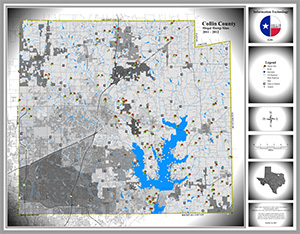
Nearly a million people call Collin County home, in part, because of its inherent beauty and charm. But not everyone shares this fondness for the county and litters it with their trash. Illegal dumping is a significant problem which cost taxpayers tens of thousands of dollars in cleanup costs and lost productivity.
These dumpsites are not only unsightly, but also pose serious public health and environmental safety hazards to all of us. They contain everything from common household and yard trash to appliances, furniture and other large items, to hazardous chemical and biological waste, where they can leach into the soil and water table.
Oh, and by the way... it's against the law. You can help us preserve the appeal of Collin County by reporting illegal dumping. If you witness this activity, please call the number below. The Sheriff's Office will investigate and together we can keep Collin County beautiful.

To Report Illegal Dumping, Call (972) 547-5350
(24-HOUR HOTLINE)
Call Public Works' general office number at (972) 548-3700 to reach:
Solid Waste Officer: Mark Hines
Illegal Dumping Enforcement: Deputy Bryan Hardin
- Title
- The Illegal Dumping Problem and Why You Should Care
- Description
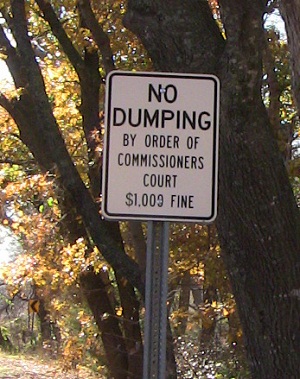
Nearly a million people call Collin County home, in part, because of its inherent beauty and charm. But not everyone shares this fondness for the county and litters it with their trash. Illegal dumping is a significant problem which cost taxpayers tens of thousands of dollars in cleanup costs and lost productivity.
These dumpsites are not only unsightly, but also pose serious public health and environmental safety hazards to all of us. They contain everything from common household and yard trash to appliances, furniture and other large items, to hazardous chemical and biological waste, where they can leach into the soil and water table.
Oh, and by the way... it's against the law. You can help us preserve the appeal of Collin County by reporting illegal dumping. If you witness this activity, please call the number below. The Sheriff's Office will investigate and together we can keep Collin County beautiful.
To Report Illegal Dumping, Call (972) 547-5350
(24-HOUR HOTLINE)
Call Public Works' general office number at (972) 548-3700 to reach:
Solid Waste Officer: Mark Hines
Illegal Dumping Enforcement: Deputy Bryan Hardin
Heavy Metal: The Equipment of Public Works
Building and maintaining our county infrastructure is incredibly hard work requiring some awe-inspiring equipment. Take a look at the big and powerful machines of Public Works:
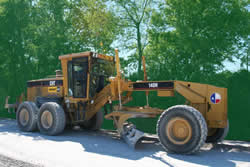
Asphalt Grader
Levels roadbeds to give a flat, smooth base for asphalt and less work for your car's shocks.
Make: CAT Motor Grader
Minimum Operating Weight: 32,000 lbs
Engine: 6 cylinder turbo diesel
HP: 165
Turning Radius: 26 ft
Blade: 14" L x 2" W x 3/4" thick high carbon steel alloy
Surface Breakers: Rear-mounted 7- tooth scarifer with 3 ripper shanks
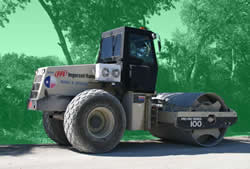
Roller
Compacts roadbeds and asphalt, ensuring smooth hard roads.
Make: Ingersol-Rand Compactor
SD- 105
Operating Weight: 23,600 lbs
Engine: 4 cylinder turbo diesel
HP: 125
Drum width: 84 in
Drum diameter: 59 in
Vibration (centrifugal force): 58,000 lbs (high)/46,300 lbs (low)
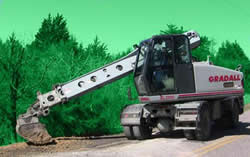
Excavator
Heavy digger with a long reach.
Make: Gradall XL3100
Weight: 37,000 lbs (gross)
Engine: 6 cylinder turbo diesel
HP: 190
Top Speed: 50 mph
Rated lift capacity: 603 lbs
Max telescoping boom length: 23 ft
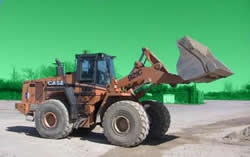
Wheel Loader
Heavy material lifter and mover.
Make: Case 921C
Weight: 50,000 lbs (gross)
Engine: 6 cylinder turbo diesel
HP: 300
Bucket weight: 4,955 lbs
Lift capacity: 29,737 lbs
- Title
- The Equipment of Public Works
- Description
Building and maintaining our county infrastructure is incredibly hard work requiring some awe-inspiring equipment. Take a look at the big and powerful machines of Public Works:
Asphalt Grader
Levels roadbeds to give a flat, smooth base for asphalt and less work for your car's shocks.
Make: CAT Motor Grader
Minimum Operating Weight: 32,000 lbs
Engine: 6 cylinder turbo diesel
HP: 165
Turning Radius: 26 ft
Blade: 14" L x 2" W x 3/4" thick high carbon steel alloy
Surface Breakers: Rear-mounted 7- tooth scarifer with 3 ripper shanksRoller
Compacts roadbeds and asphalt, ensuring smooth hard roads.
Make: Ingersol-Rand Compactor
SD- 105
Operating Weight: 23,600 lbs
Engine: 4 cylinder turbo diesel
HP: 125
Drum width: 84 in
Drum diameter: 59 in
Vibration (centrifugal force): 58,000 lbs (high)/46,300 lbs (low)Excavator
Heavy digger with a long reach.
Make: Gradall XL3100
Weight: 37,000 lbs (gross)
Engine: 6 cylinder turbo diesel
HP: 190
Top Speed: 50 mph
Rated lift capacity: 603 lbs
Max telescoping boom length: 23 ftWheel Loader
Heavy material lifter and mover.
Make: Case 921C
Weight: 50,000 lbs (gross)
Engine: 6 cylinder turbo diesel
HP: 300
Bucket weight: 4,955 lbs
Lift capacity: 29,737 lbs
Local Heroes: Public Works Staff as First Responders
Public Works Staff as First Responders
Did you know that your Public Works staff are first responders to a number of emergencies and disasters?
Think about them during the next brush fire, flood, tornado…
Incidents To Which Public Works Has Responded
Hurricane Katrina (summer 2005)
30 staff and vans
Transported evacuees from airport to temporary housing.
Westminster Tornado (May 2006)
60 staff with dump trucks, backhoes, front loaders and Gradall
Removed trees from houses and cleared debris.
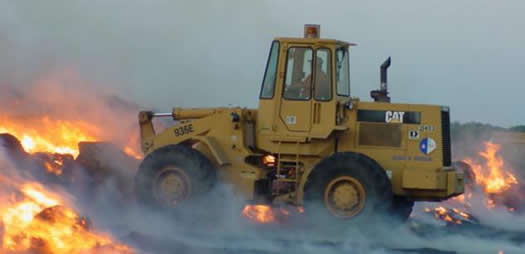
Celina Hay Field Fire (June 2006)
10 staff with front loaders, motor graders and water trucks
Separated burning bales of hay and spread them out on the ground, making them easier to extinguish.
Hurricane Rita (summer 2007)
30 staff and vans
Transported evacuees from airport to temporary housing.
Floods (summer 2008)
100 staff
Placed barricades on closed streets.
House Fires (recurring)
10 staff
Assist volunteer fire departments, knock down structures and create openings in walls for water hoses.
Snow and Ice (recurring)
Sand trucks
Spread sand on roads to make vehicle travel safer.
Other (ongoing)
Staff stations water trucks throughout the county during drought conditions.
Staff provided water delivery via water trucks to areas affected by the NTMWD water main break and Altoga water pump break.
Staff provides traffic control on two bridges over Lake Lavon during the 4th of July weekend.
- Title
- Public Works Staff as First Responders
- Description
Public Works Staff as First Responders
Did you know that your Public Works staff are first responders to a number of emergencies and disasters?
Think about them during the next brush fire, flood, tornado…
Incidents To Which Public Works Has Responded
Hurricane Katrina (summer 2005)
30 staff and vans
Transported evacuees from airport to temporary housing.Westminster Tornado (May 2006)
60 staff with dump trucks, backhoes, front loaders and Gradall
Removed trees from houses and cleared debris.Celina Hay Field Fire (June 2006)
10 staff with front loaders, motor graders and water trucks
Separated burning bales of hay and spread them out on the ground, making them easier to extinguish.Hurricane Rita (summer 2007)
30 staff and vans
Transported evacuees from airport to temporary housing.Floods (summer 2008)
100 staff
Placed barricades on closed streets.House Fires (recurring)
10 staff
Assist volunteer fire departments, knock down structures and create openings in walls for water hoses.Snow and Ice (recurring)
Sand trucks
Spread sand on roads to make vehicle travel safer.Other (ongoing)
Staff stations water trucks throughout the county during drought conditions.
Staff provided water delivery via water trucks to areas affected by the NTMWD water main break and Altoga water pump break.
Staff provides traffic control on two bridges over Lake Lavon during the 4th of July weekend.
Recycling Roadways: Full Depth Reclamation
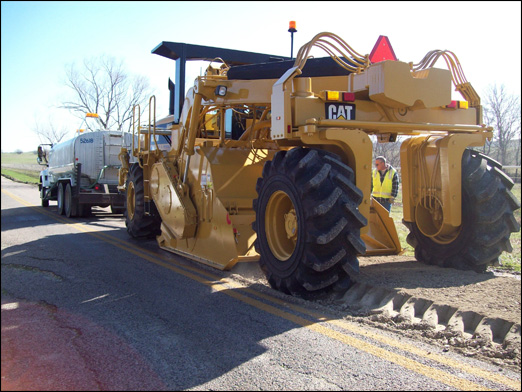
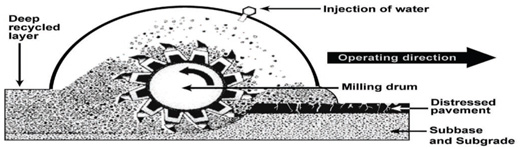
Full Depth Reclamation (FDR) is a process that rebuilds failed asphalt pavements by recycling the existing roads. Existing asphalt and base materials are pulverized, rejuvenated and compacted to produce a strong, durable base material for a new roadway. There is no need to transport new material to the project site or haul away old material for disposal. A specialized piece of equipment called a Reclaimer uses a reinforced rotating milling drum to grind and mix the existing pavement and sub-base. The benefits of FDR are many including:
- Reclaimed roads have more stable bases, can support heavier loads and last longer with lower maintenance costs.
- Eliminates the need to transport material preserving substantial amounts of diesel fuel and man hours.
- Allows for the complete reconstruction of the pavement with little or no excavation and removal costs.
- Allows for the reuse of all existing material which reduces overall project costs.
- Reclamation is efficient; construction of roadway is completed much faster.
- FDR is environmentally friendly. Materials are recycled which requires little or no dumping of waste materials.
The explosive growth Collin County has experienced over the last decade along with the increased vehicular traffic convinced PW staff to investigate advanced, proven technologies for maintaining and rehabilitating asphalt roads.
A thorough analysis in early 2011 revealed that Full Depth Reclamation was the best process, offering numerous benefits, including a superior final product and cost efficiency in terms of material and man-hours. In late 2011, Public Works acquired the equipment necessary to conduct FDR operations and is actively pursuing plans to rehabilitate several miles of distressed pavement each year.
CBS DFW: Collin County Invests In Mixer To Help Pave Damaged Roads
- Title
- Full Depth Reclamation
- Description
Full Depth Reclamation (FDR) is a process that rebuilds failed asphalt pavements by recycling the existing roads. Existing asphalt and base materials are pulverized, rejuvenated and compacted to produce a strong, durable base material for a new roadway. There is no need to transport new material to the project site or haul away old material for disposal. A specialized piece of equipment called a Reclaimer uses a reinforced rotating milling drum to grind and mix the existing pavement and sub-base. The benefits of FDR are many including:
- Reclaimed roads have more stable bases, can support heavier loads and last longer with lower maintenance costs.
- Eliminates the need to transport material preserving substantial amounts of diesel fuel and man hours.
- Allows for the complete reconstruction of the pavement with little or no excavation and removal costs.
- Allows for the reuse of all existing material which reduces overall project costs.
- Reclamation is efficient; construction of roadway is completed much faster.
- FDR is environmentally friendly. Materials are recycled which requires little or no dumping of waste materials.
The explosive growth Collin County has experienced over the last decade along with the increased vehicular traffic convinced PW staff to investigate advanced, proven technologies for maintaining and rehabilitating asphalt roads.
A thorough analysis in early 2011 revealed that Full Depth Reclamation was the best process, offering numerous benefits, including a superior final product and cost efficiency in terms of material and man-hours. In late 2011, Public Works acquired the equipment necessary to conduct FDR operations and is actively pursuing plans to rehabilitate several miles of distressed pavement each year.
CBS DFW: Collin County Invests In Mixer To Help Pave Damaged Roads